Culinary Elevations of the Urubamba: Botany Above the Clouds
How indigenous communities and forward-thinking chefs in Peru's Sacred Valley are resurrecting ancestral agricultural intelligence.
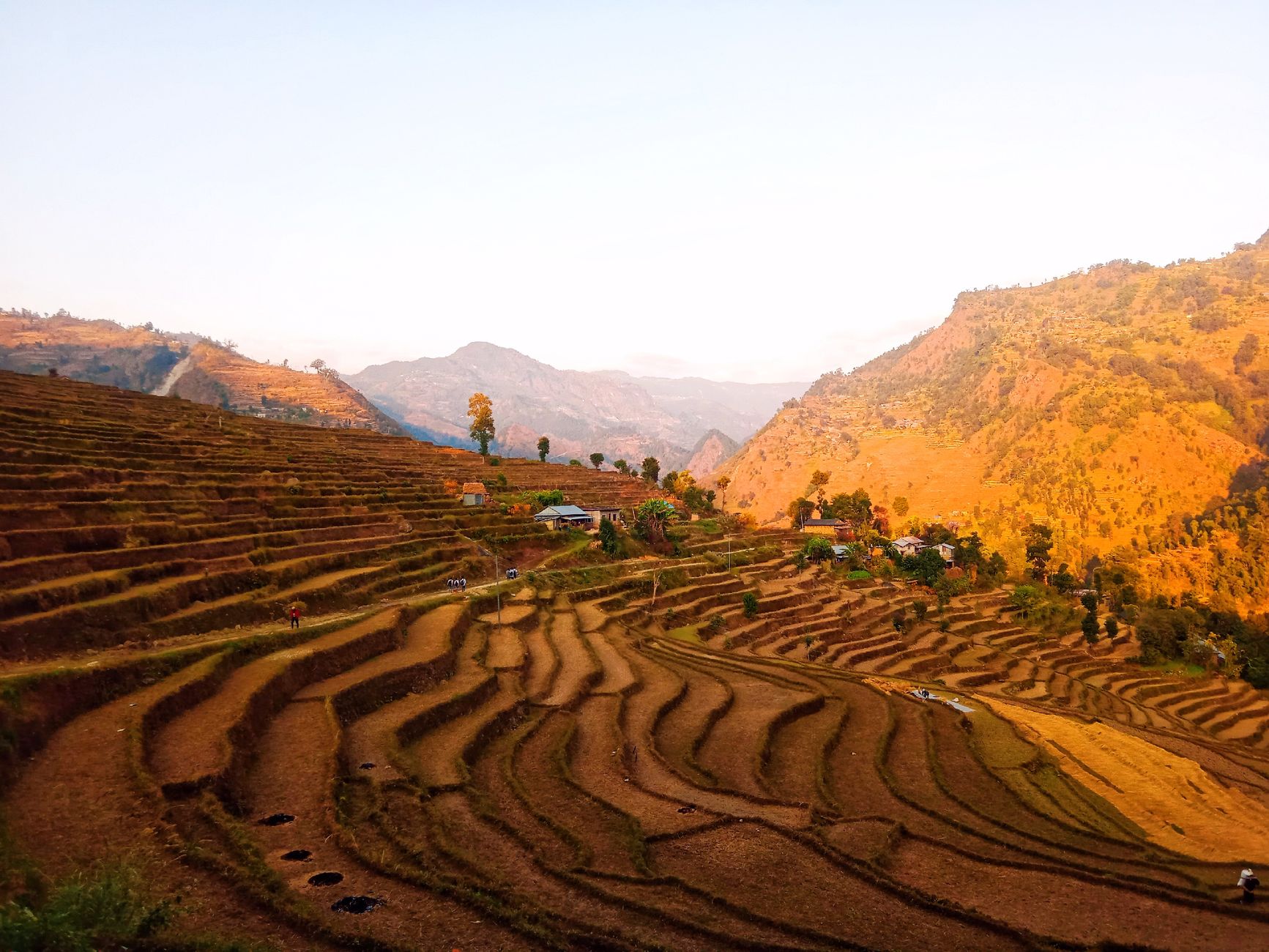
Circular agricultural terraces of Moray, Sacred Valley, Peru.
Table of Contents
At 3,500 meters above sea level, the air in the Urubamba valley has a crystalline thinness that quickens the pulse. Here, sunlight carries an intense ultraviolet sting, while night temperatures drop sharply toward freezing. To conventional Western agronomy, this terrain appears hostile. To Quechua farmers, it is the most sophisticated open-air laboratory on Earth.
1. The Micro-Terrace Laboratories of Moray
The concentric circular depressions at Moray descend nearly 150 meters into the limestone plateau. Temperature variations between the lowest sunken level and the upper rim can reach up to 15 degrees Celsius — mimicking nearly twenty distinct ecological zones.
Inca botanists used these micro-climates to acclimatize Amazonian grains and wild tubers to harsh Andean elevations. Today, young researchers work side by side with village elders, cataloging over 3,000 heirloom potato variations that resist modern blights without agrochemical intervention.
2. Freeze-Drying on Glacial Night Winds: Chuño
Long before industrial vacuum machinery was invented, Andean communities mastered lyophilization. Harvested potatoes are spread across straw blankets during sub-zero July nights, then trampled by foot at sunrise to expel bitter glycoalkaloid juices before the sun can cook the pulp.
"The resulting chuño can be stored in stone granaries for up to ten years without spoiling. It is not survival food; it is a profound testament to solar and cryogenic synergy."
3. Mindful High-Altitude Dining Ethos
Modern dining experiences in the Sacred Valley have embraced this heritage. Menus are indexed not by courses, but by altitude: river basin herbs at 2,800m, native tubers at 3,600m, and wild lichen and cyanobacteria harvested from glacial tarns above 4,200m. Traveling here reminds us that terroir is not merely soil — it is the atmospheric elevation and human patience that tend it.
Request an Andean Field Advisory
Connect with our South American correspondents for private estate visits, hiking coordinates, and culinary guides.
Inquire with Us