The Rhythm of Scandinavian Stilt Houses: Solitude at 68 Degrees North
Examining the enduring timber engineering of Lofoten's fishermen cabins, where architecture is not a statement against nature, but an agreement with the tide.
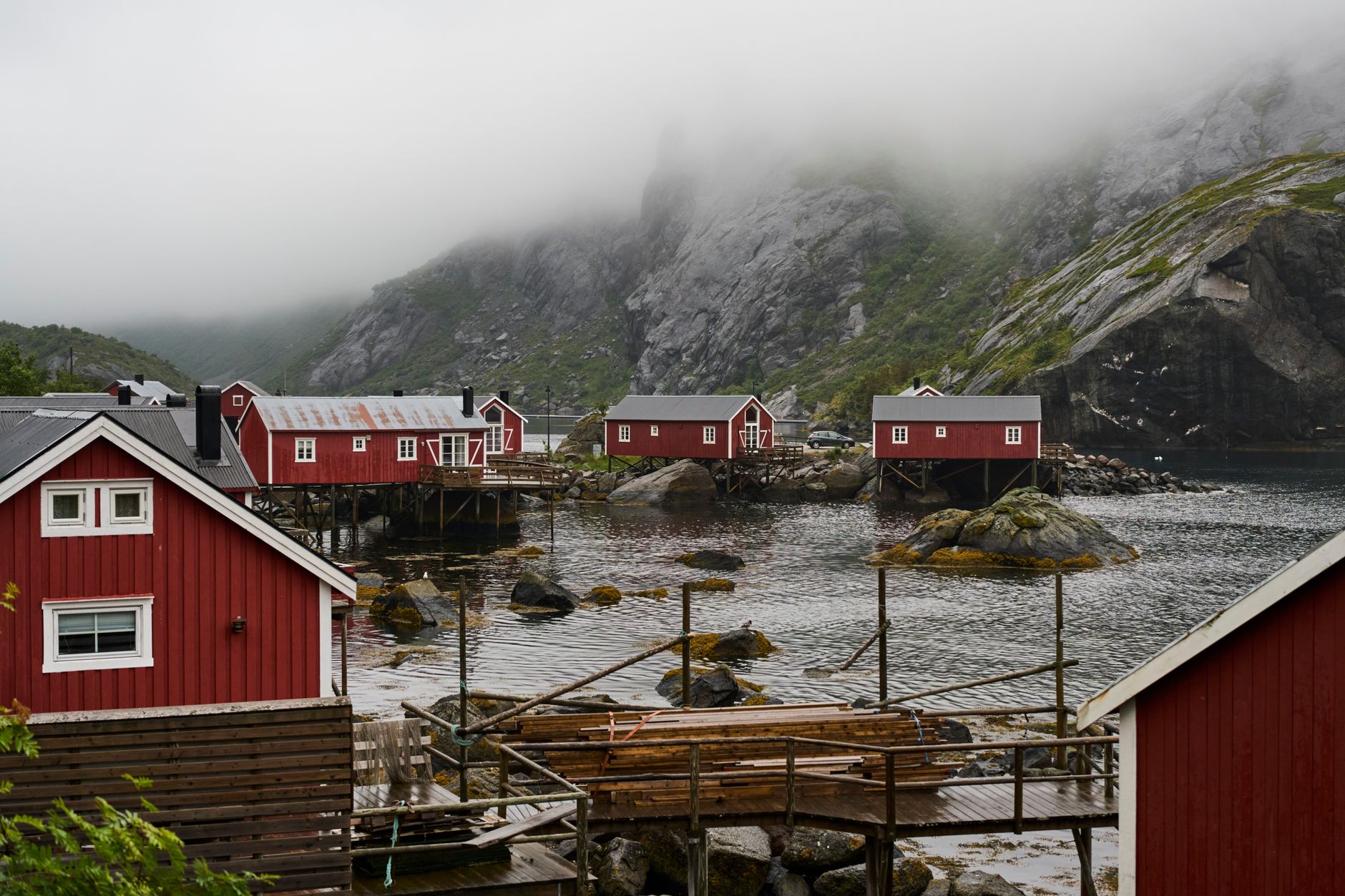
Reine, Lofoten Islands. Photographed during the autumn equinox.
Table of Contents
When the winter swells arrive in the Vestfjorden, waves strike the granite cliffs with a resonance that reverberates through floorboards. To an unaccustomed visitor, the creak of hand-hewn Scots pine feels precarious. To the resident mariners who have inhabited the rorbuer since King Øystein decreed their construction in 1120 AD, it is simply the measured breathing of the North Sea.
1. Pine, Granite, and Cod Liver Oil Foundations
The traditional stilt cabin was never conceived as picturesque accommodation. It was an uncompromising industrial necessity. Builders drove birch and pine pilings directly into undersea crevasses at low tide, resting the main living quarters partially over sea water. This allowed fishing skiffs to tie up immediately below the trapdoor, unloading cod catches without dragging heavy barrels across slippery shore rocks.
"We do not varnish the sea-facing timbers; we treat them with a warm emulsion of cod liver oil, pine tar, and iron oxide. The salt petrifies the surface rather than decaying it."
The iconic crimson pigment — known historically as faluröd or tranmaling — was originally the most economical mix available to working families, whereas white paint, requiring imported zinc or lead pigments, was reserved for wealthy merchants.
2. The Interior Geometry of Polar Light
North of the Arctic Circle, sunlight is not merely an amenity; it dictates psychological survival. Windows in original cabins were purposefully compact to minimize thermal transmission, yet carefully oriented toward the southwest to capture low winter solar azimuths. The interior walls, stripped of ornamentation, were scrubbed with lye and potash to reflect the brief noon luminescence across the room.
Field Recommendation
When traveling through Moskenesøy, bypass the reconstructed resort clusters and seek out independent community trusts preserving original 19th-century salt-store facilities.
3. Modern Conservation vs. Tourism Pressures
Today, the influx of international photography workshops has placed immense pressure on the fragile shoreline infrastructure of Lofoten. Preservation architects advocate for strict moratoriums on new water-piling permits, requiring hospitality operators to adapt existing agricultural structures rather than altering untouched tidal shorelines.
As travelers, our role is to honor the pace of these communities: stepping lightly, respecting the drying racks that support genuine local livelihoods, and recognizing that true luxury is not room service, but unbroken silence against arctic squalls.
Commission an Arctic Territory Dossier
Receive our comprehensive route map of preserved timber cabins, coastal rail links, and local artisans throughout northern Scandinavia.
Connect with Our Desk